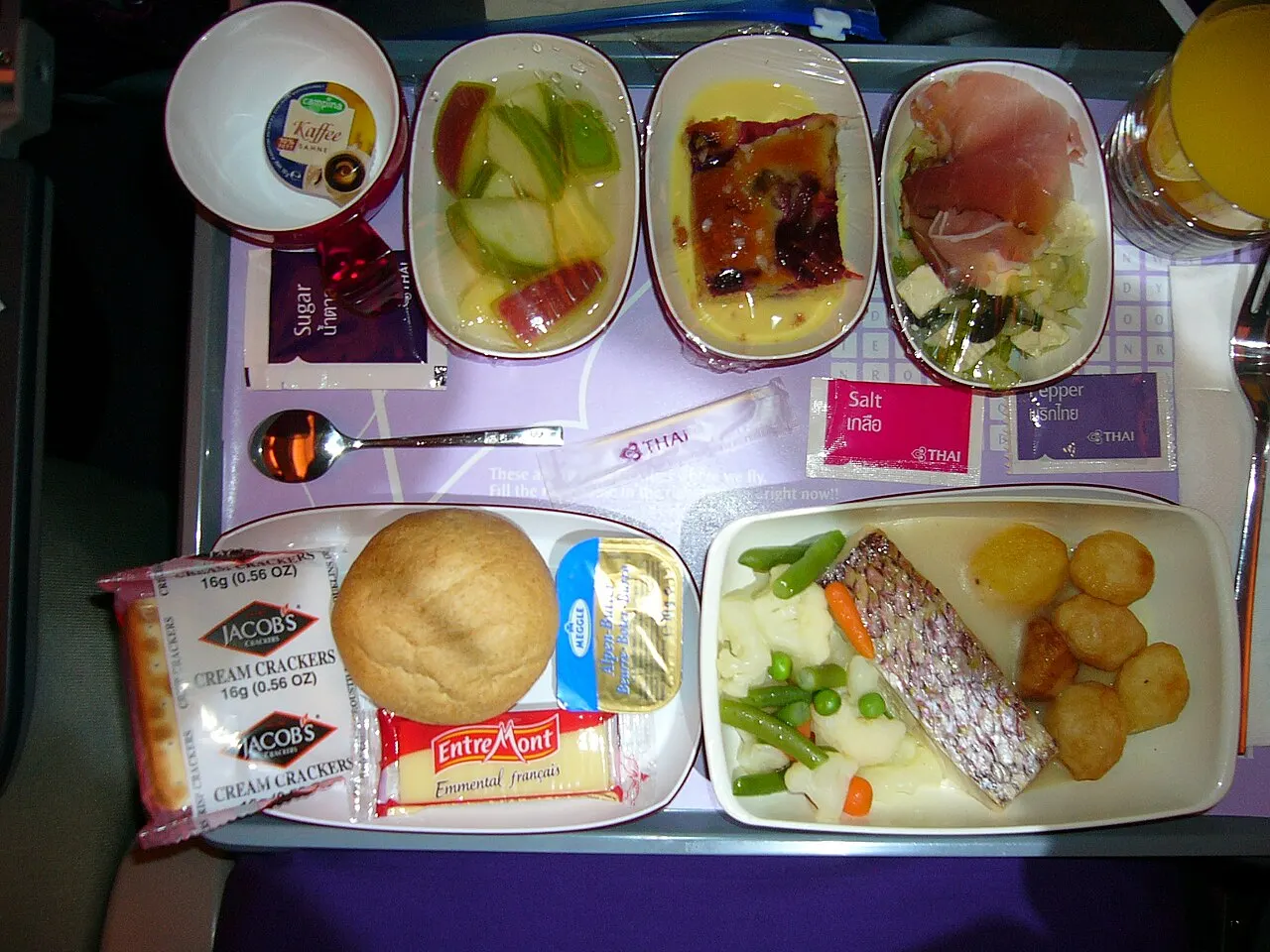
On a plane your sense of taste switches off: the dry air and cabin pressure make food seem blander. That’s why in-flight meals come with more salt and sauce. Knowing what to order and what to avoid helps you arrive feeling better, especially on long flights.
Order a special meal in advance
Almost all airlines that serve food offer special meals for free: vegetarian, vegan, gluten-free, diabetic, lactose-free, children’s, halal or kosher. You need to request it at least 24–48 hours in advance on the airline’s website or app, under “manage booking”. As a bonus, special meals are usually served before everyone else’s.
What sits best
- Light dishes: chicken, fish, rice, cooked vegetables.
- Fruit and salad, which also hydrate you.
- Protein and fibre to keep hunger at bay without feeling heavy.
- On night flights, a light dinner will help you sleep.
Tip: request your special meal as soon as you buy your ticket, and check it again in the app a couple of days before you fly.
What’s best avoided
- Fizzy drinks: at altitude, gas expands and bloats your stomach.
- Pulses, cabbage and fried food, for the same reason.
- Alcohol: on board it dehydrates you more and hits harder than you’re used to. If you drink, alternate each glass with a glass of water.
- Lots of coffee: it dehydrates you and will make it hard to sleep if you need to.
- Very salty dishes: they make you thirstier and add to swelling in your feet and ankles.
Water matters most
Cabin air has very low humidity, and you get dehydrated without noticing. Drink water often, even if you’re not thirsty. The easiest way is to go through security with an empty bottle and refill it at the terminal’s water fountains.
For drinking, bottled water or water from your own bottle is better than what comes out of the plane’s taps.
Important: drink roughly one glass of water for every hour of flight. Cabin air is very dry, and dehydration makes tiredness and jet lag worse.
Flights without food on board
On low-cost airlines and many short flights, food costs extra and the choice is limited. Eating something in the terminal or bringing your own solid food (sandwiches, fruit, nuts) is cheaper and usually healthier.
Remember that many countries don’t allow you to bring in fresh animal or plant products: finish whatever you’ve brought before landing.
With kids
Small, varied snacks work better than one big meal. Bring something they can eat during take-off and landing: chewing helps equalise the pressure in their ears.
As an Amazon Associate we earn from qualifying purchases.