Sleeping sitting up, with light, noise and a fidgety neighbour, isn’t easy. But on a long flight, a few hours of sleep make the difference between arriving shattered or ready to start your trip. Here’s what works.
Pick the right seat
- Window: you can lean against the wall and nobody will wake you to go to the toilet. It’s the best seat for sleeping.
- Away from the toilets and galleys: there’s more light, noise and movement there.
- Avoid the last row, which often doesn’t recline, and the emergency exit rows if you want to recline fully.
- Seats towards the front usually feel turbulence less.
Tip: when you check in online, pick a window seat on a side of the plane away from the toilets. It’s the change that makes the biggest difference to your sleep.
Support your head
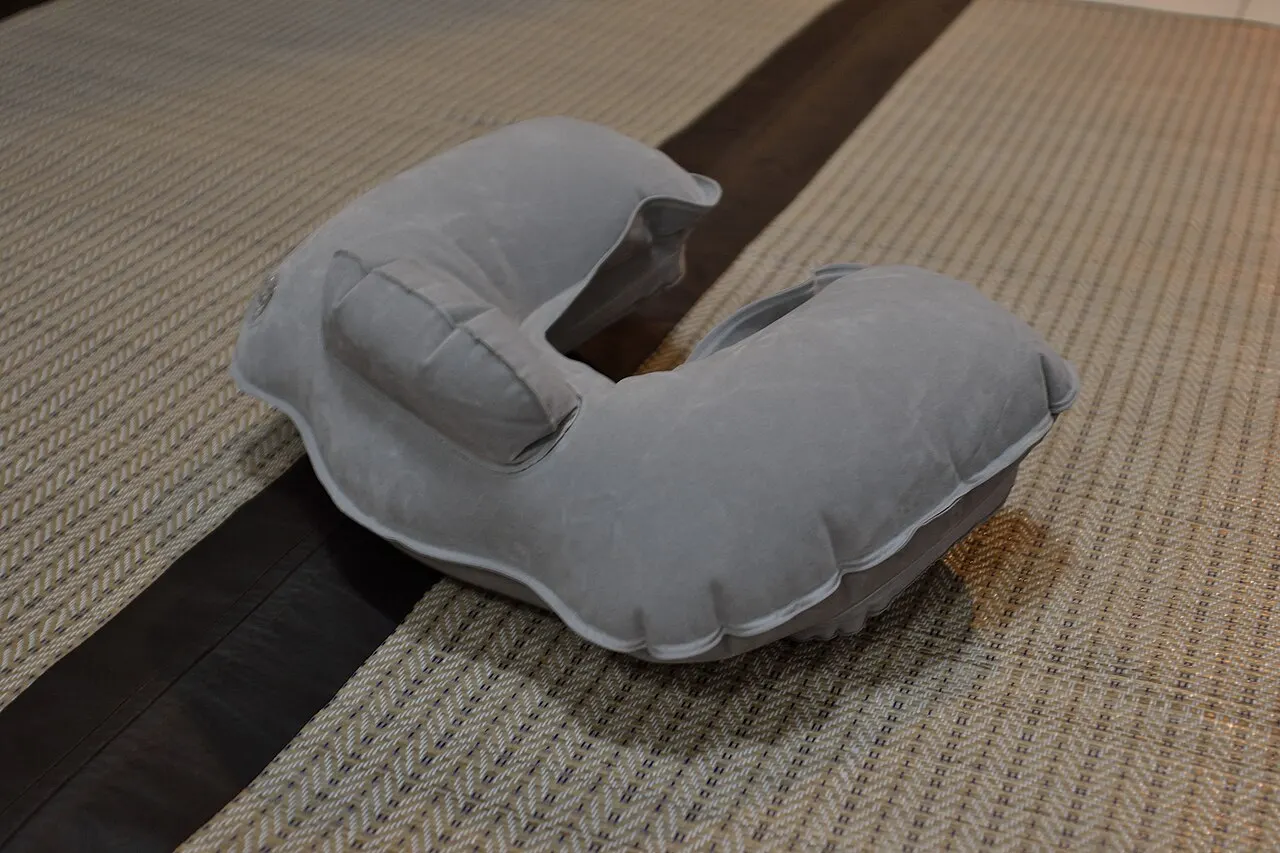
The problem with sleeping sitting up is that your head drops forward or to the side and you wake up. A neck pillow that properly supports your chin and the sides prevents it.
Darkness and quiet
Even when the cabin lights go off, there’s always a screen on somewhere. An eye mask that doesn’t press on your eyes keeps you in the dark.
The constant hum of the engines is more tiring than it seems. Noise-cancelling headphones almost completely remove it; if you don’t want to spend that much, foam earplugs also work.
Get comfortable
- Loose clothes in layers: the cabin usually gets cold when the lights go off.
- Thick socks, and take your shoes off (feet swell on long flights).
- Fasten your seat belt over the blanket, so the crew can see it and won’t wake you during turbulence.
What to eat and drink
- Avoid alcohol: it helps you fall asleep, but the sleep is poorer and it dehydrates you.
- No coffee in the hours before you want to sleep.
- Drink water regularly: cabin air is very dry.
- A light dinner helps more than a big meal.
Important: get up and walk around every few hours, even if you’re comfortable. On long flights, moving and drinking water help prevent circulation problems.
Match your sleep to your destination
To reduce jet lag, try to sleep when it’s night at your destination. Set your watch to local time as soon as you board and plan your rest around it: if you arrive in the morning, sleep on the flight; if you arrive in the evening, it’s better to stay awake and sleep when you get there.
As an Amazon Associate we earn from qualifying purchases.