Old town and Postiguet
To sleep at the foot of the castle, close to the beach and the bars of the old town, and do everything on foot. The nightlife is lively, so check the street carefully if noise bothers you.
Itinerary · Alicante
7-day itinerary for Alicante: the old town, the castle, the Explanada, the northern beaches, Elche, Tabarca and a day trip to Altea and Guadalest.
This 7-day itinerary is for anyone who wants to get to know Alicante in depth and explore the Costa Blanca at a relaxed pace. It starts with the old town and the castle, continues with the market, the northern beaches and museums, devotes one day to Elche and another to Tabarca, and leaves the seventh day for the villages of Altea and Guadalest.
From Alicante-Elche Miguel Hernández Airport you have several options. The C6 bus reaches the centre with a stop at the train station, and at Luceros it connects with the TRAM to the Costa Blanca. If you are staying in Elche, lines R10 and R11 link the airport with the city. Taxis leave from the rank on the arrivals road and, as the city is compact, the journey is short.
Day 1
Old town
Steep little lanes of whitewashed houses and colourful facades, with flowerpots on every corner. Climb without hurrying and in comfortable shoes: the neighbourhood scales the castle hillside and the steps show no mercy.
Old town
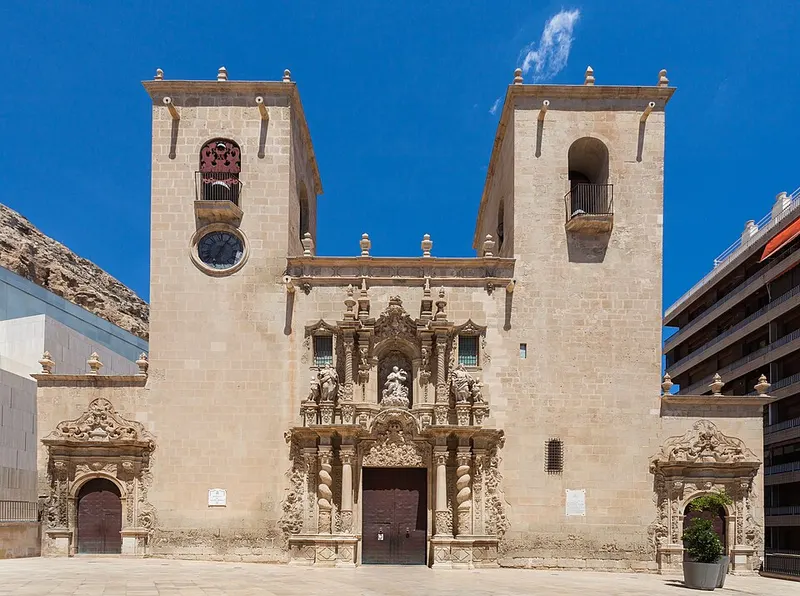
The oldest church in the city, Gothic with a Baroque doorway, stands in the square of the same name, in the heart of the old town. It is a good stop for understanding what Alicante was like before tourism.
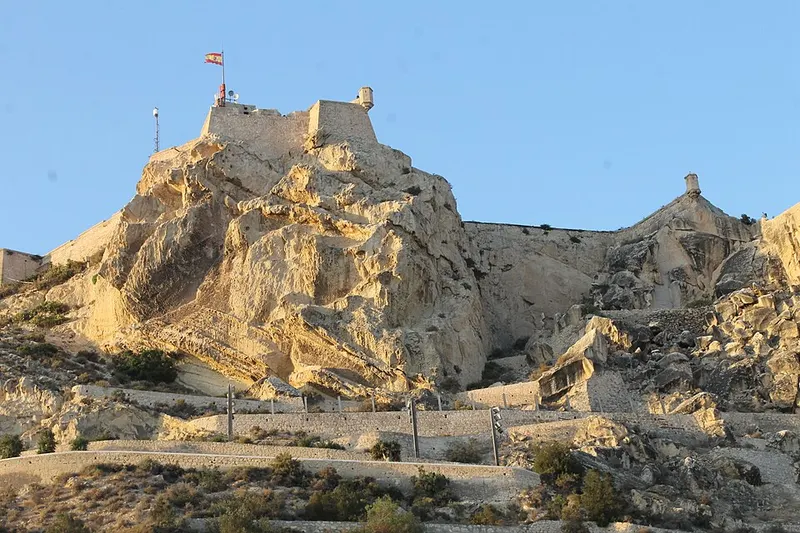
Mount Benacantil
The fortress overlooks the city from the top of Mount Benacantil and offers the best views of the bay and the port. You can go up by lift or on foot along the path that starts at Postiguet; in hot weather, it is better to go up early or at sunset.
Mount Benacantil
A park on the lower slopes of the castle, with paths, viewpoints and views over the old town. It is a good way to walk down from the castle at a leisurely pace and catch your breath for a while before returning to the streets.
Day 2
Centre
A Modernista market from the early 20th century, with stalls selling fish, fruit, cured meats and salted fish. It is a good place for a bite or to buy local products such as turrón, almonds or fruit from the huerta.
Old town
The Baroque town hall has a much-photographed facade on the Plaza del Ayuntamiento. A few steps away is the Co-Cathedral of San Nicolás de Bari, with its cloister and large dome, a cool break in the middle of your walk.
Port
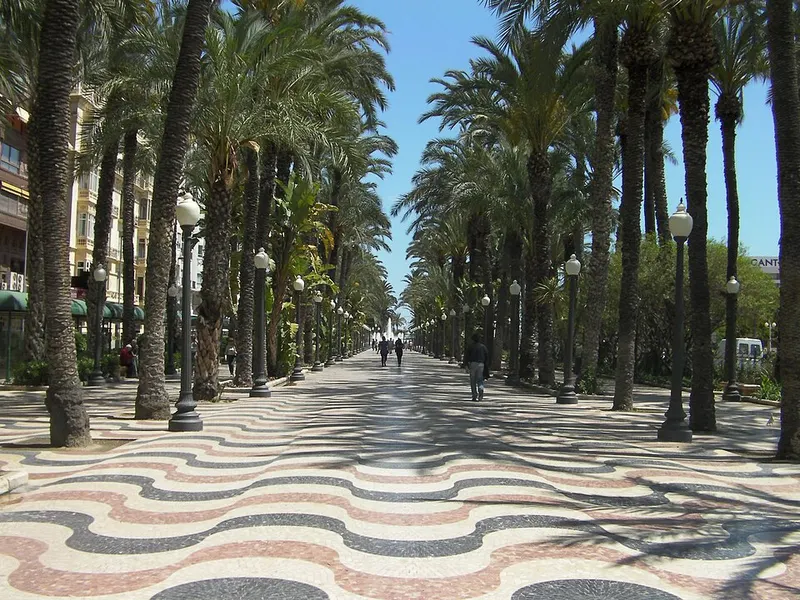
Alicante's best-known seafront promenade, with palm trees and an undulating mosaic floor that imitates the movement of the sea. Stroll along it slowly in the late afternoon and find a terrace facing the marina.
Postiguet
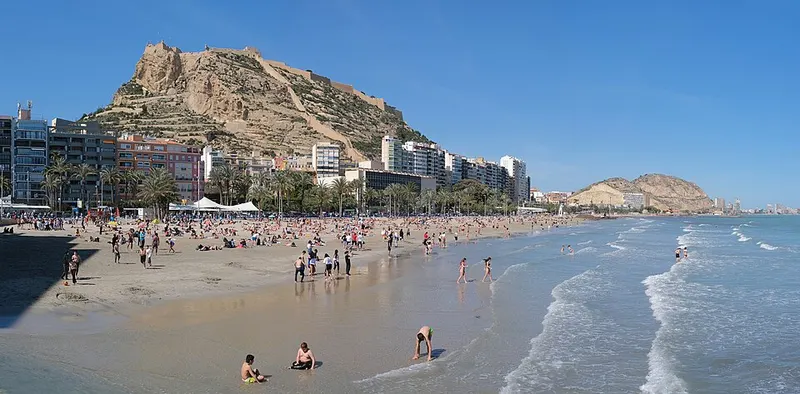
The city's urban beach, at the foot of the castle and a few steps from the old town. It is convenient for a quick dip or a stroll, although it gets crowded in summer; for something quieter, choose other beaches outside the centre.
Day 3
San Juan
A long fine-sand beach north of the city, with a seafront promenade and beach bars. You get there by TRAM from Luceros, and it is the best option for a proper day at the beach.
Cabo de las Huertas
An area of rocky coves and low houses, quieter than San Juan. It is a very pleasant place for a walk by the sea and a swim in clear water, with water shoes if you do not like rocks.
La Albufereta
An Iberian and Roman archaeological site on a small hill, next to La Albufereta. It is little known and can be visited quickly, a good addition if you are interested in Alicante's ancient history.
Day 4
Centre
The provincial archaeological museum, housed in a former hospital, is one of the most complete in the region. It covers everything from prehistory to the modern era with a very instructive layout and is ideal if the day dawns cloudy.
Old town
Housed in the Casa de la Asegurada, a 17th-century building next to the basilica, it brings together work by 20th-century artists such as Dalí, Miró and Chillida. It is a short, pleasant visit that fits well between walks around the old town.
Centre
The Rambla is the shopping axis of the centre, with terraces and trees. It ends at Plaza de los Luceros, a TRAM hub and starting point for many journeys, where you can usually see the Luceros fountain.
Day 5
Elche
The Elche palm grove, a UNESCO World Heritage Site, is the largest date palm forest in Europe. Walk through it among irrigation channels and orchards; the Huerto del Cura is the best-known garden and the easiest to visit.
Elche
In the centre, it is worth seeing the Basilica of Santa María, home of the Misteri d'Elx, and the Altamira Palace, next to the Calahorra bridge. The city is flat and small and easy to explore on foot.
Day 6
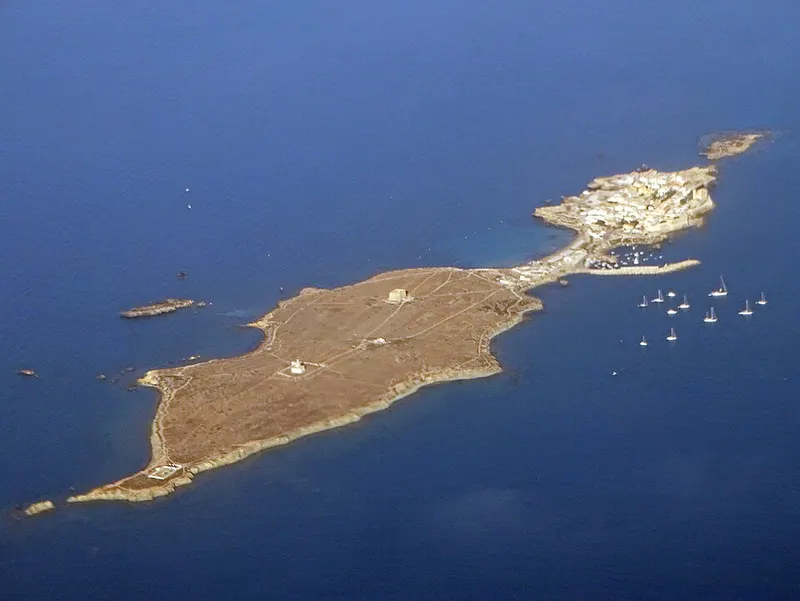
Tabarca
A small walled island and marine reserve off the coast, reached by boat from the port of Alicante in a little under an hour. Stroll around the village, look at the walls and gates and spend some time in the crystal-clear coves.
Tabarca
The waters of the marine reserve are perfect for putting on a mask and watching fish. For lunch, it is common to order the caldero tabarquino, a seafood rice dish closely tied to the island; book a table if you go in high season.
Day 7 · Day trip
The most complete excursion on the Costa Blanca. In the morning, take the TRAM from Luceros to Altea and climb through its white old town up to the blue-domed church. Then the bus from Benidorm climbs to Guadalest, a mountain village with a castle and a turquoise reservoir. Set off early and check return times, or book an organised tour that takes care of everything in one day.
Alicante
To sleep at the foot of the castle, close to the beach and the bars of the old town, and do everything on foot. The nightlife is lively, so check the street carefully if noise bothers you.
The most convenient option for arriving and getting around: close to the station, Luceros and the Mercado Central, with shops, restaurants and good bus and TRAM connections.
If you want beach and quiet, with seafront hotels and the TRAM to the centre. It is the best base for beach days and for those with a car.
Itinerary · Alicante
Three days are enough to see the old town, the castle, the seafront promenade and the beach. With more time you can add Elche, Tabarca and the villages of the Costa Blanca.
The boats to Tabarca and guided tours in high season. The rest of the itinerary can be decided as you go.
Yes. Alicante can be explored on foot, and the TRAM, train and bus reach Elche, Villajoyosa, Benidorm and Altea. For Guadalest, the bus from Benidorm or an organised tour are the most convenient options.