Santiago de Compostela in 5 days: day-by-day itinerary
5-day itinerary for Santiago de Compostela: the cathedral, old town, Bonaval, Sar, Monte do Gozo, the Cidade da Cultura and an excursion to A Coruña.
5days
16stops
6Areas
This 5-day itinerary is for anyone who wants to get to know Santiago de Compostela at a relaxed pace and spend a day outside the city. The first two days are devoted to the cathedral and the old town; the third to Bonaval and Sar; the fourth to the pilgrims’ arrival at Monte do Gozo and the Cidade da Cultura; and the fifth to A Coruña.
From Santiago-Rosalía de Castro airport, on the outskirts of the city, you can reach the centre in three ways. City bus 6A links the terminal with Santiago and is the cheapest option. Taxis have a permanent rank at the terminal exit and take about 15-20 minutes to the centre. If you are continuing to A Coruña, Lugo or the final stages of the Camino, Monbus coaches also leave from the airport.
Tips
Wear comfortable shoes with a good sole: the old town is cobbled, with slopes and steps, and it gets slippery when it rains.
Always carry a waterproof jacket or a small umbrella: in Galicia the weather changes quickly, even in summer.
Book the cathedral rooftop and museum visit in advance, and check which day the Pilgrims’ Mass is held if you want to attend.
If you have walked the Camino, go to the Pilgrim’s Office with your stamped credential to collect the Compostela.
Try the pulpo a feira, empanada, Padrón peppers and tetilla cheese in the taverns of the Rúa do Franco.
For A Coruña, check the weather before going: in wind or rain, the Paseo Marítimo and the Tower of Hercules are much less enjoyable.
1
Day 1
Cathedral, Obradoiro and Quintana
4 stops
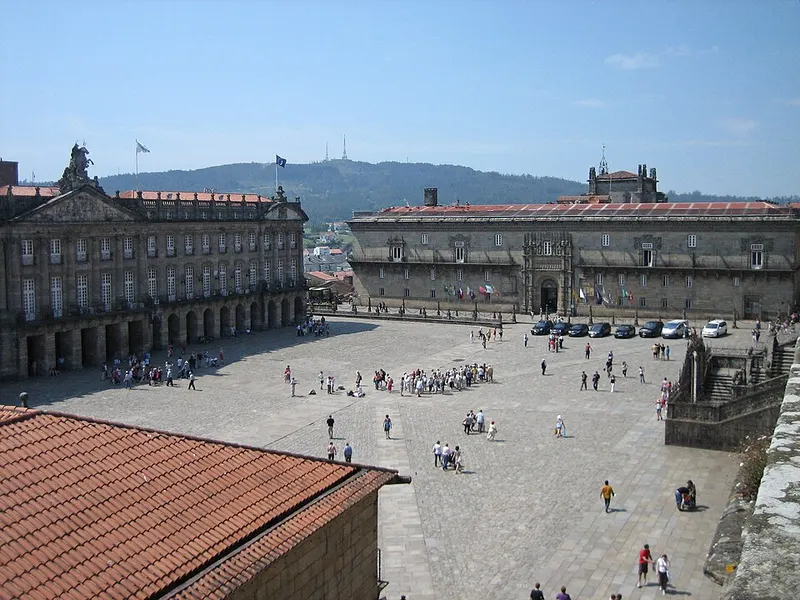
Praza do Obradoiro
Old town
The great square in front of the cathedral, surrounded by the Hostal dos Reis Católicos, the Pazo de Raxoi and the Colexio de San Xerome. This is where pilgrims end up lying on the ground gazing at the towers; go first thing or as evening falls, when it is quieter.
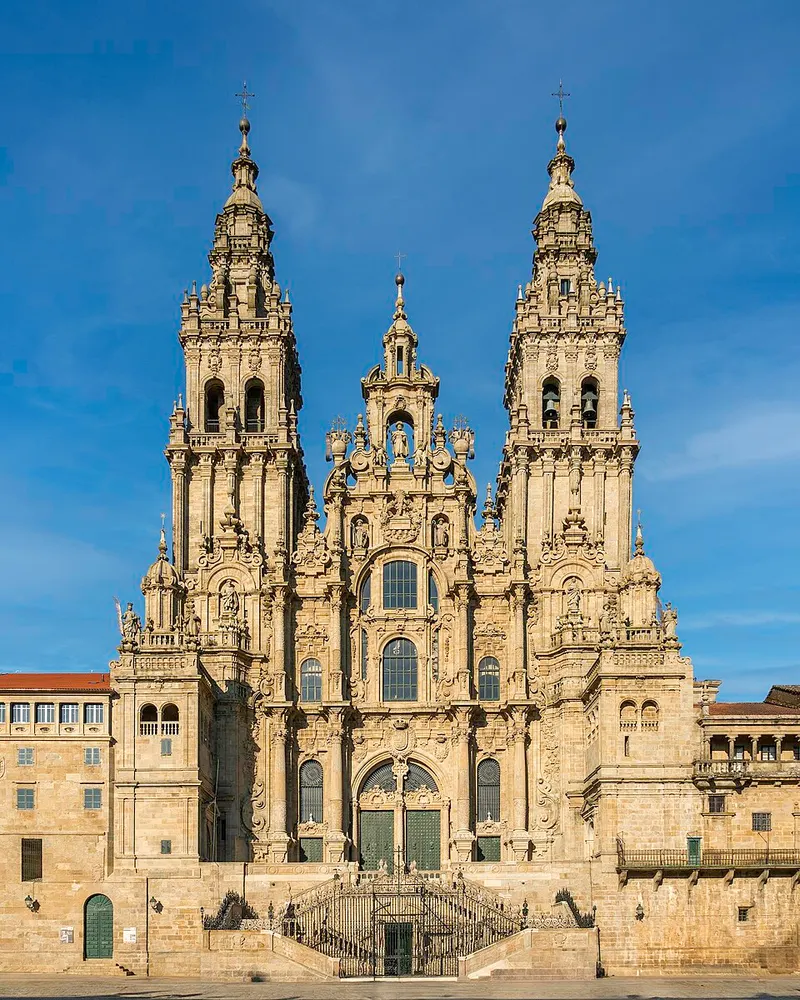
Catedral de Santiago
Old town
This is the pilgrims' goal and the heart of the city: a Baroque façade facing the Obradoiro and, inside, the Pórtico de la Gloria and the tomb of the apostle. Book the museum and rooftop visit in advance; the rooftops give a different view of the old town.
Two very different squares on one side of the cathedral: the Quintana, on two levels with the Porta Santa, and the Praterías, with its fountain of horses and the cathedral's Romanesque façade. A good place to sit on the steps and watch people go by.
Hostal dos Reis Católicos
Old town
The Plateresque building that closes off the square was a pilgrims' hospital and is now a parador. Even if you are not staying, you can peek into its courtyards and entrance hall to see what medieval hospitality was like.
2
Day 2
Old town, market and Rúa do Franco
4 stops
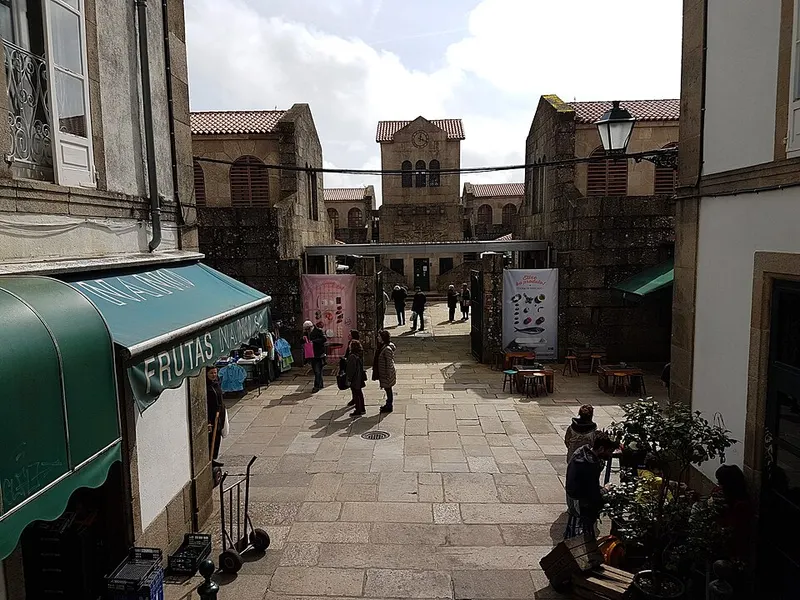
Mercado de Abastos
Old town
A granite market with stalls selling fish, shellfish, cheeses and Galician produce. Buy something to taste (empanada, tetilla cheese) or order at one of the taverns nearby that prepare on the spot whatever you buy at the stall.
Mosteiro de San Martiño Pinario
Old town
A huge Benedictine monastery next to the cathedral, with a Baroque church with a grand altarpiece and cloisters you can visit without the crowds. It is one of the visits that tends to surprise people most.
The streets with the best atmosphere for tapas: portions of pulpo a feira, empanada, Padrón peppers and albariño or ribeiro wine. Stroll without hurrying and let the rain, if it comes, be part of the plan: the stone arcades help.
Parque da Alameda and Paseo da Ferradura
Alameda
The favourite park of the people of Santiago, with the Carballeira de Santa Susana and the Ferradura promenade, from where you can see the whole cathedral with its rear façade. It is the ideal place to say goodbye to the day in soft light.
3
Day 3
Bonaval, pilgrims and Sar
3 stops
Convento de San Domingos de Bonaval and Parque de Bonaval
Old town
The convent houses the Museo do Pobo Galego, with its famous triple-helix staircase. Around it, the Parque de Bonaval is a sloping garden with quiet corners and views of the old town; next to it is the CGAC, the contemporary art centre by Álvaro Siza.
It tells the story of the Camino and the cult of the apostle, and helps you understand what you then see in the cathedral and the city. It is a short visit, perfect for a spell of rain.
A 12th-century Romanesque church famous for its leaning columns and arches, which look about to give way but have stood for centuries. You can walk there from the old town and the surroundings are peaceful.
This is the hill from which pilgrims first sight the cathedral towers, about 5 km from the centre. You get there by bus or taxi, and you can walk the last stretch to the city to feel what the arrival of the Camino is like.
Rúa de San Pedro and Porta do Camiño
Rúa de San Pedro
Many pilgrims on the Camino Francés enter the city this way. Follow the street to the Porta do Camiño and from there to the Zona Vella, with small shops and simple bars along the way.
Oficina del Peregrino
Old town
If you have walked at least the last 100 km, this is where you apply for the Compostela with your stamped credential. Even if you are not a pilgrim, the area around the office, on the Rúa das Carretas, is a good place to watch walkers arrive with their backpacks.
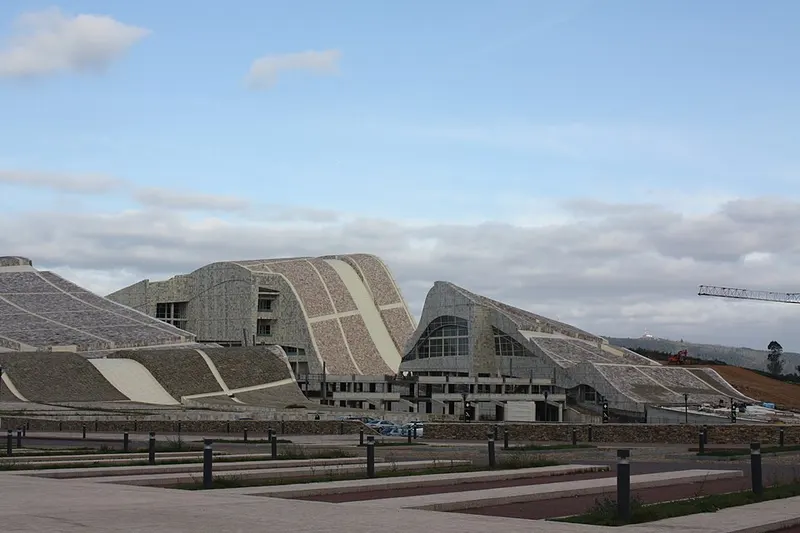
Cidade da Cultura de Galicia
Monte Gaiás
Peter Eisenman's complex at the top of Monte Gaiás is a modern counterpoint to the granite old town: a museum, a library and wide views of the city. You get there by city bus or on a long uphill walk; check beforehand which buildings are open.
A Coruña is about 35-45 minutes by train from Santiago, with frequent services. Start at the Praza de María Pita, surrounded by arcades with the town hall at the far end, and walk to the Paseo Marítimo, which skirts the coast for several kilometres. Reach the Tower of Hercules, the Roman lighthouse still in use, declared a World Heritage Site. Afterwards you can stop by the beaches of Riazor and Orzán, see the Domus and have a drink in the Marina area, with its glassed-in galleries, before returning by train.
To wake up a couple of steps from the cathedral and do everything on foot. The streets are cobbled, with slopes and steps, and in the evening the bars of the Rúa do Franco are lively, so choose your street carefully if noise bothers you.
02
Ensanche (Rúa do Hórreo and surroundings)
A more modern, flatter area with plenty of hotels and restaurants, about 10-15 minutes on foot from the Zona Vella. Convenient if you arrive with luggage or are catching the train or bus.
03
Alameda and Paseo da Ferradura
A quiet setting next to the city's best-loved park, with views of the old town and walking access to the cathedral. A good option for anyone who prefers a greener environment.
04
Rúa de San Pedro and Sar
A simpler district with local life: the Rúa de San Pedro is the way in for many pilgrims and the Sar district is a walk from the Zona Vella. Useful if you will spend a lot of time out of your accommodation.
How many days do you need to see Santiago de Compostela?
Four days allow you to see the cathedral, the old town, the museums, Sar and the Cidade da Cultura at a relaxed pace, and to spend a fifth day in A Coruña. With more time you can add the Rías Baixas or the Costa da Morte.
How do I get the Compostela, the pilgrim's certificate?
You apply for it at the Pilgrim's Office, near the cathedral, with your stamped credential. You must have walked at least the last 100 km of the Camino (200 km by bike). Arrive early to avoid queues.
Can you visit A Coruña in a day?
Yes. The train takes about 35-45 minutes, there are also buses, and the city is very easy to explore on foot from the station.
What should I do if it rains in Santiago?
It is a rainy city and it is worth carrying a waterproof jacket. The arcades of the old town, the museums, the Mercado de Abastos and the taverns let you keep to your plan; save the views, Monte Pedroso and the excursions for clear days.
Photo credits
Praza do Obradoiro: slideshow bob, CC BY-SA 2.0, Wikimedia Commons
Catedral de Santiago: Fernando, CC BY-SA 4.0, Wikimedia Commons
Mercado de Abastos: Atobar, Public domain, Wikimedia Commons
Cidade da Cultura de Galicia: P.Lameiro, CC BY-SA 3.0, Wikimedia Commons
We use Google Analytics cookies to understand how the site is used. They are only set if you accept.