Sol and Madrid de los Austrias
The most convenient base for sightseeing on foot: Plaza Mayor, the Royal Palace and the main metro lines are close by. It is lively and a little noisy at night.
Itinerary · Madrid
7-day itinerary in Madrid: Habsburg Madrid, the Prado, the Thyssen, the Reina Sofía, the Retiro, the Gran Vía, Madrid Río, the Casa de Campo and an excursion to Segovia.
This 7-day itinerary goes deeper: it covers the essentials of the historic centre and the museums again, but adds the Thyssen, the Barrio de las Letras, Madrid Río, the Casa de Campo and the Santiago Bernabéu stadium. The seventh day is an excursion to Segovia.
To get in from Adolfo Suárez Madrid-Barajas Airport you have four options. The Airport Express Line (Línea Exprés Aeropuerto) is a bus that runs 24 hours between terminals T1, T2 and T4 and Atocha station. Metro line 8 has stations at T1-T2-T3 and at T4, and reaches Nuevos Ministerios in about 15 minutes, with an airport supplement. Cercanías C1 leaves from T4 for Chamartín, Atocha and Príncipe Pío, and from the other terminals you get there by the free shuttle bus. Taxis have a fixed fare to anywhere inside the M-30.
Day 1
Centre
The symbolic heart of the city, with the kilometre zero marker, the statue of the Bear and the Strawberry Tree and the clock on the Casa de Correos. It is a good starting point because almost all the streets of the centre lead off from here on foot.
Habsburg Madrid
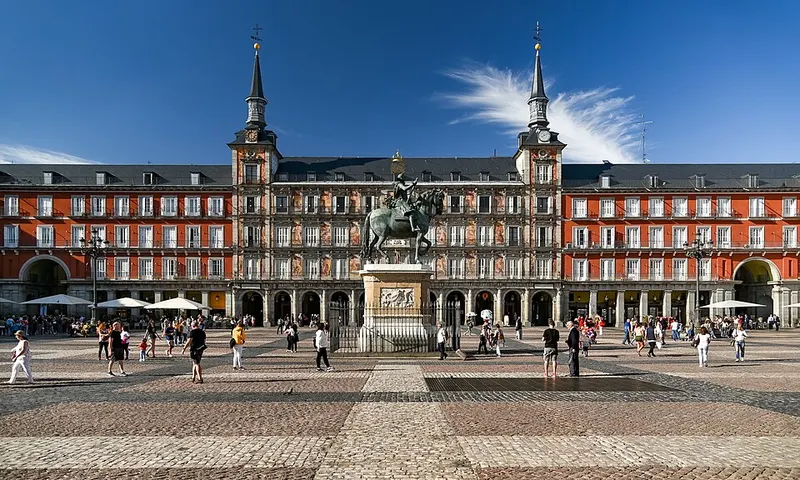
A 17th-century arcaded square, enclosed and very photogenic. The bars under the arcades are expensive and touristy: it is better to have a drink in the little streets around it.
Habsburg Madrid
An iron-and-glass market next to the Plaza Mayor where you can try pinchos and local produce standing up. It gets very crowded, so go before or after lunchtime.
Habsburg Madrid
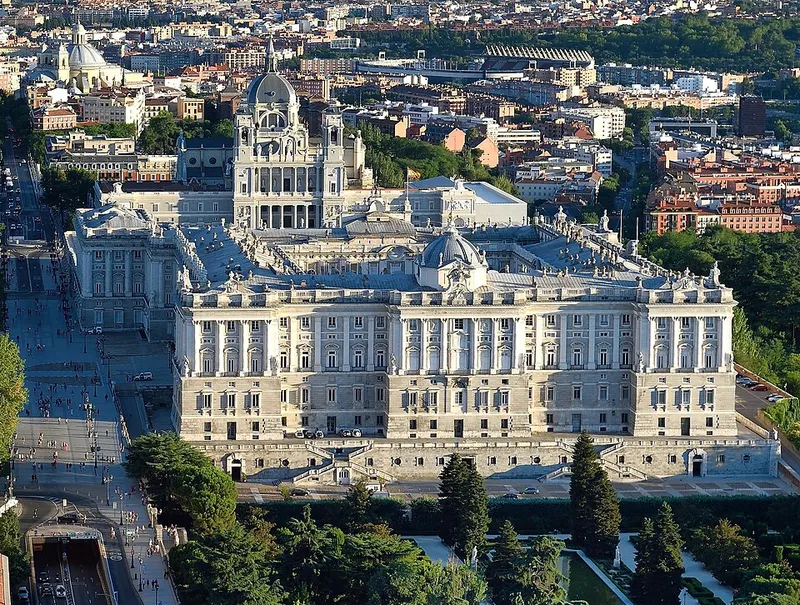
The Royal Palace is the official residence of the Crown, with historic rooms open to visitors, and right opposite is the Almudena cathedral. The Sabatini Gardens next door are a good place to rest. Book your palace ticket in advance.
Day 2
Barrio de los Jerónimos
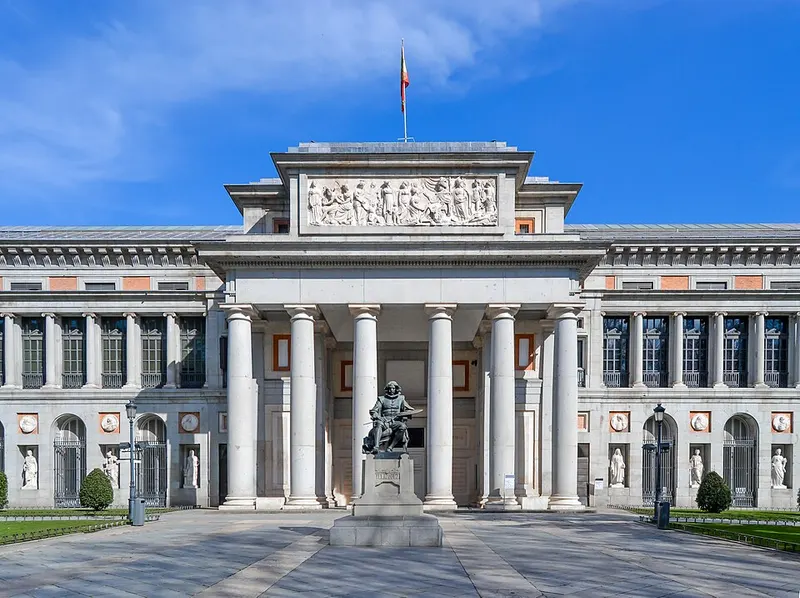
One of the world's great art galleries, with Velázquez, Goya and Bosch as the big names. Don't try to see everything: pick three or four key works or join a guided tour. Book in advance.
Retiro
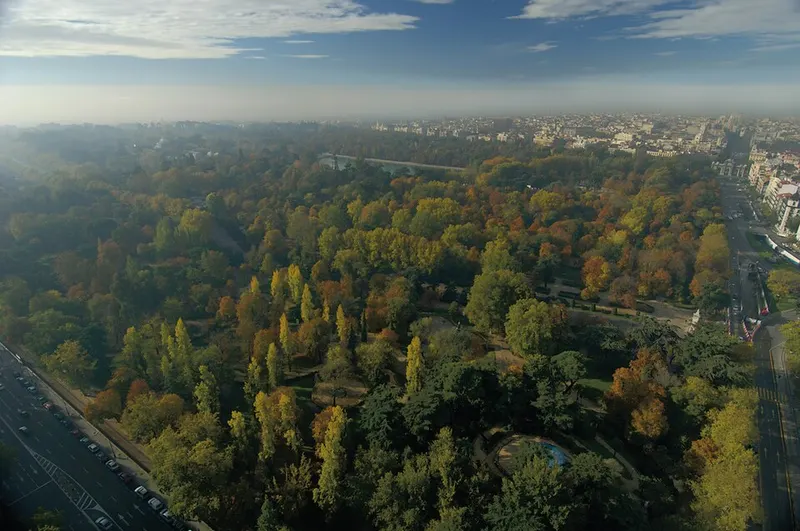
The big park in the centre, ideal for a stroll after the museum. Rent a rowing boat on the pond, head to the Crystal Palace and sit for a while under the trees.
Retiro
An 18th-century garden next to the Prado, peaceful and with greenhouses. It is a green break between museums, with no rush.
Day 3
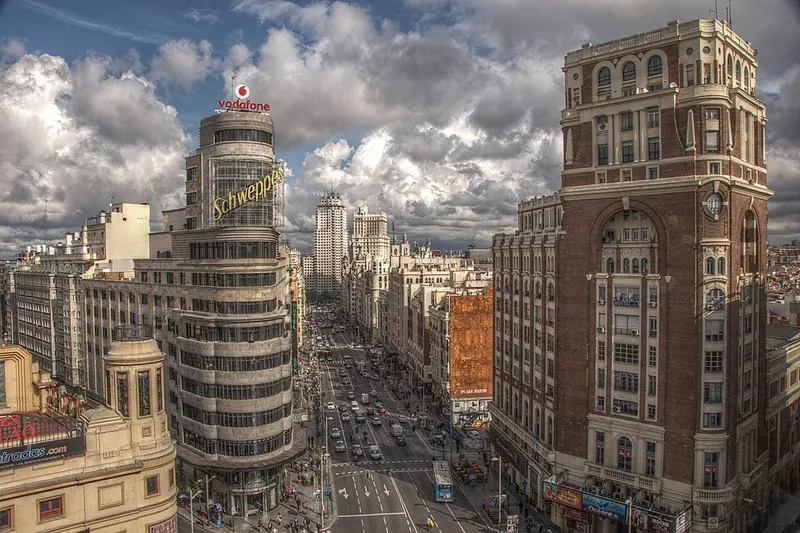
Centre
Madrid's most famous avenue, with early 20th-century buildings, theatres and shops. Walk it slowly and look up: the domes and rooftop finials are the best part.
Centre
At the end of the Gran Vía, with the Cervantes monument and views of the skyscrapers. From here walk on for about ten minutes to the Parque del Oeste.
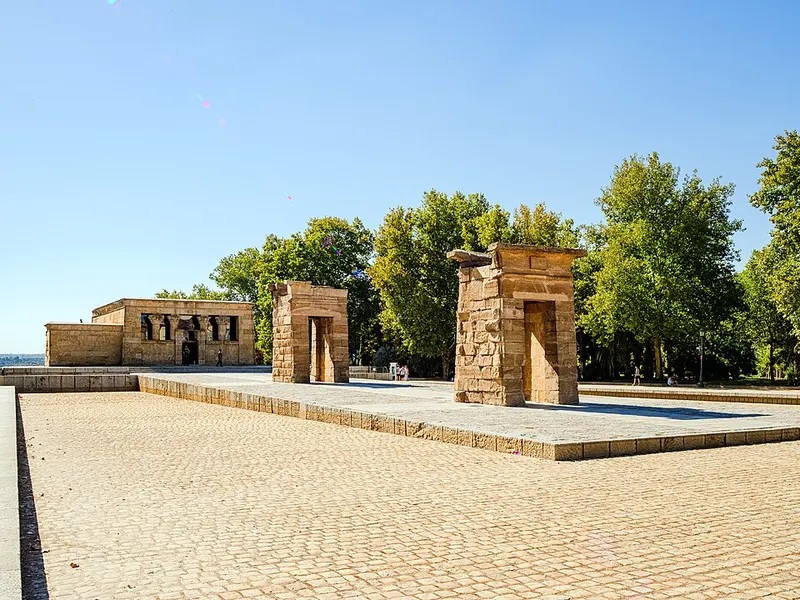
Parque del Oeste
A genuine Egyptian temple moved stone by stone to Madrid. It is best to arrive before sunset, when the light falls on the Casa de Campo and the pond that surrounds the temple.
Malasaña
The alternative neighbourhood of the centre, with second-hand shops, cafés and lively bars. The Plaza del Dos de Mayo is the best place to sit.
Chueca
A lively, open-minded neighbourhood, with squares full of terraces and plenty of restaurants. It is a convenient choice for dinner without straying far from the Gran Vía.
Day 4
Atocha
The museum of 20th-century art, famous for Picasso's Guernica, and with works by Dalí and Miró. Book in advance and head straight for the rooms that interest you most.
Lavapiés
A multicultural neighbourhood, with shops and restaurants serving cuisines from all over the world. It is a good place for lunch after the museum.
La Latina
A neighbourhood of narrow streets with the Cava Baja and its taverns, ideal for tapas at the end of the day. It is very lively, and it is best to arrive early to find a place.
Day 5
Barrio de los Jerónimos
A collection that runs through centuries of painting, from the early masters to the 20th century. It complements the Prado and the Reina Sofía very well, and together they form the so-called Art Triangle.
Barrio de las Letras
Streets where Cervantes and Lope de Vega lived, with literary quotations on the ground and many squares with terraces. It is easy to walk between museums and is perfect for lunch.
Retiro
On leaving the park by the Plaza de la Independencia side you will see the Puerta de Alcalá, and a few minutes' walk away the Plaza de Cibeles, with its fountain and the Palacio de Cibeles, which has a viewing terrace.
Day 6
La Latina
A neoclassical church with one of the largest domes in Europe. It is a short walk from La Latina, at the edge of the old town, and is usually much quieter than the cathedral.
Arganzuela
A long promenade beside the Manzanares, with bridges, play areas and a cycle lane. It is a relaxed way to see another side of the city.
Casa de Campo
The cable car leaves from the Parque del Oeste and crosses to the Casa de Campo, a huge park with a lake and trails. The views of the Royal Palace and the cathedral from the cabins are the highlight.
Chamartín
Real Madrid's stadium, which can be visited on a tour. It is in the north, reachable by metro, so set aside time for it on this day.
Day 7 · Day trip
The high-speed train takes around half an hour from Chamartín to Segovia-Guiomar station, which is on the outskirts: from there you reach the centre by bus. There await the Roman aqueduct, the Alcázar and the cathedral, and it is traditional to have roast suckling pig.
Madrid
The most convenient base for sightseeing on foot: Plaza Mayor, the Royal Palace and the main metro lines are close by. It is lively and a little noisy at night.
Close to the Prado and Atocha, with squares with terraces and a calmer atmosphere than Sol. A very good option if you are going to see museums.
For those who want neighbourhood life, cafés and bars, a walk from the Gran Vía. Ideal if you like going out at night.
An elegant neighbourhood of shops and quiet streets, next to the Retiro. A good option if you put rest above atmosphere.
Itinerary · Madrid
With a week you can see Madrid in depth: the three great museums of the Art Triangle, several neighbourhoods and an unhurried excursion.
Book the Prado, the Reina Sofía, the Thyssen and the Royal Palace in advance, and the train to Segovia if you travel in high season.
Yes, it is the most practical way. The centre is covered on foot and the metro connects the other areas, so you do not need to rent a car. Excursions are done by train or bus.
Besides Segovia, Toledo is the most popular, and you can also visit Alcalá de Henares or El Escorial, all reachable by train or bus.