
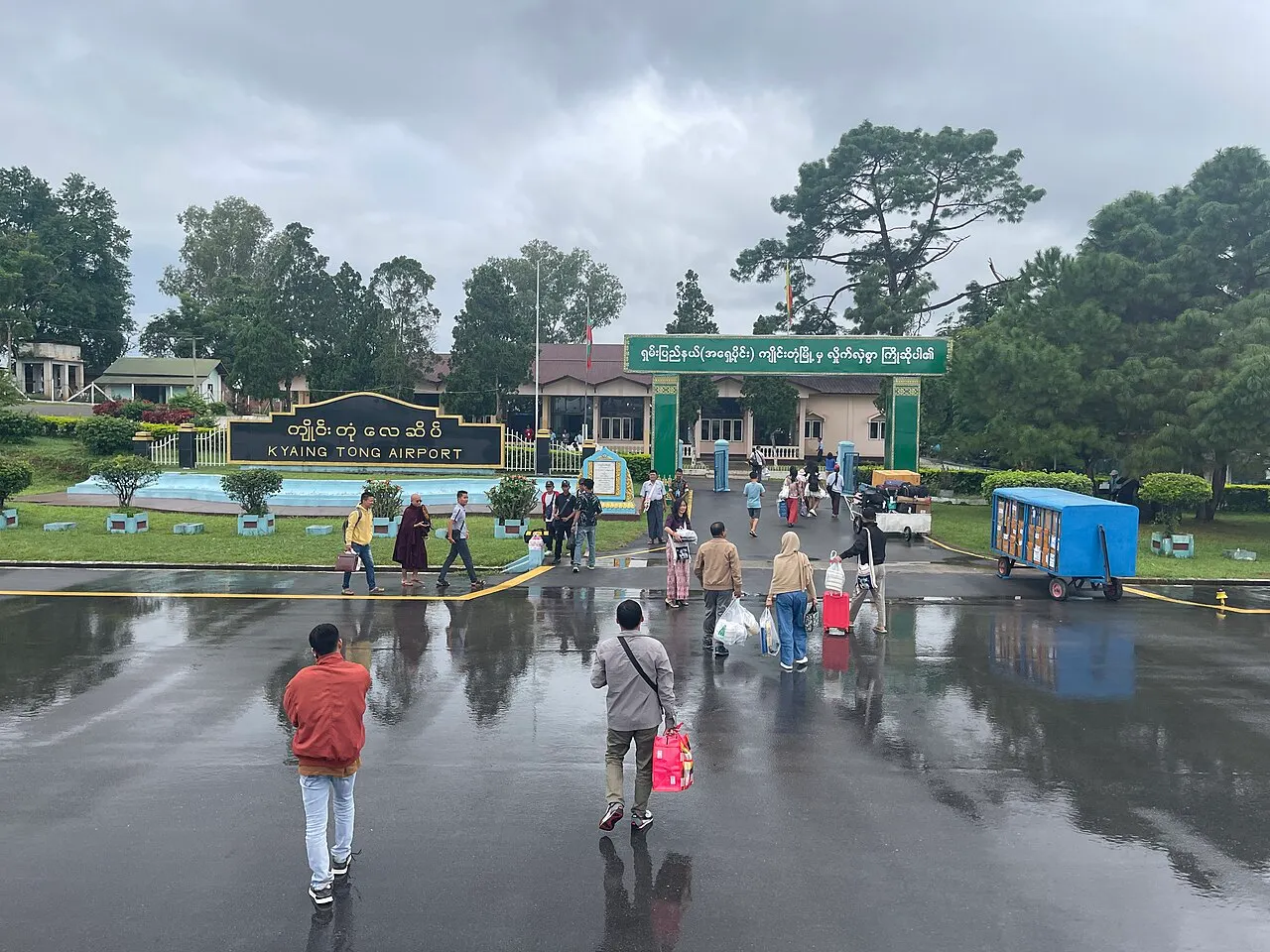
Airport · Kengtung, Myanmar
Kengtung Airport KET
1 km from central Kengtung. Live flights, getting to town, car rental and where to stay.
- to the centre
- 1 km
- terminals
- 1
- local time
- --:--
- IATA · ICAO
- KET · VYKG
About the airport
Kengtung Airport serves Kengtung, a town in Myanmar’s eastern Shan hills near Thailand and Laos, known for its lake and hill-tribe markets. It is a small regional airport with limited scheduled domestic flights. Domestic routes and schedules in Myanmar can change with little notice, so it’s worth confirming your flight shortly before travelling.
Terminals
It has a single small terminal building, with arrivals and departures under the same roof. Flights are few, mainly domestic services, so check the schedule before you travel.
Services
Facilities are basic, so it is worth arriving prepared; hotels, restaurants and shops are in the city. A taxi is the usual way to get to and from the airport.
Getting to the city
Taxi
Taxis or pre-arranged transport wait outside the terminal, or can be booked through your hotel; agree the fare before getting in, as most are not metered.
Airport map
Terminal
A single, small terminal building, with arrivals and departures under the same roof. It is a small regional airport with limited scheduled domestic flights.
Kengtung
Things to do in Kengtung
Kengtung, in Myanmar's eastern Shan hills near Thailand and Laos, is known for its lake and hill-tribe markets.
Frequently asked questions
How far is the airport from central Kengtung?
Kengtung Airport airport is about 1 km from central Kengtung.
How do I get from the airport to central Kengtung?
From Kengtung Airport airport you can take Taxi. Pre-booked taxis and private transfers are also available.
How many terminals does Kengtung Airport airport have?
Kengtung Airport has one terminal: Terminal.
Landing in Kengtung?
Book your car and your stay before you arrive: more choice and better prices.
Photo credits
- The terminal building of Kengtung Airport: EmeraldRange, CC0, Wikimedia Commons
- Kengtung market: Sai Htun Lin, CC BY-SA 4.0, Wikimedia Commons